The Psychology Behind Live Entertainment: Why Live Experiences Feel More Powerful Than Screens

Have you ever left a concert, comedy show, theatre performance, or live event feeling like you floated away on air? You’re certainly not alone. While streaming services have given us unprecedented access to entertainment, they can’t capture the thrill of experiencing the excitement of being a live audience member. It's not a question of what you are watching but rather how your brain and feelings react to an actual experience.
In this guide, we will discuss the science behind entertainment experiences, discover how live entertainment works, find out why it's good to participate in live shows, and understand why people appreciate events more than watching through a screen.
What Is the Psychology Behind Live Entertainment?
The psychology of live entertainment looks at the emotional, mental, and social processes that make attending live events more engaging and memorable than watching the same content on a screen. Live events bring together human interaction, anticipation, unpredictability, and shared feelings. These factors create experiences that are hard to duplicate on television or streaming services.
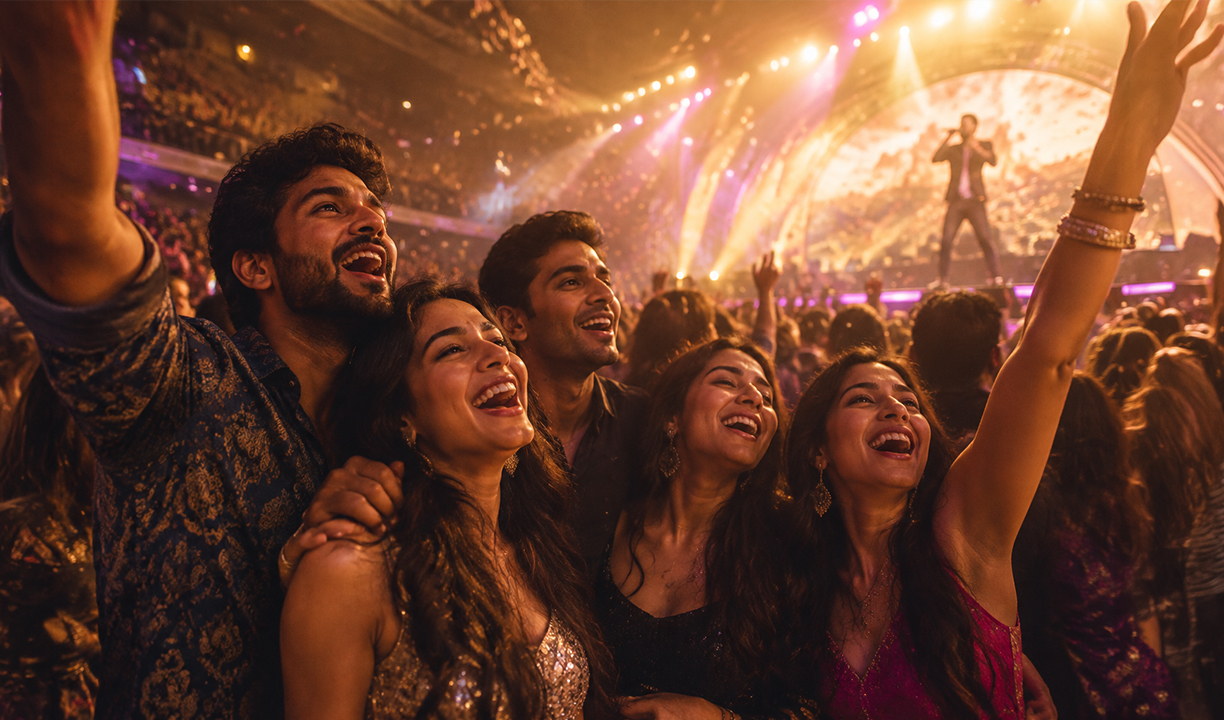
For instance, seeing your favourite artist perform live is not just about hearing the music. It involves feeling the crowd's excitement, witnessing unexpected moments, and sharing the atmosphere with thousands of others. Research shows that our brains react differently when we participate in real-life experiences compared to passive digital viewing. The mix of visual, auditory, and social stimulation creates stronger emotional memories that can last for years.
Insight: Live entertainment offers memorable experiences because it combines emotional involvement, social connection, and real-time interaction in ways that digital media cannot fully replicate. First Music Festival in India? Complete Beginner's Survival Guide
Why Do Live Performances Feel More Exciting Than Watching Online?
Three key psychological factors make live performances feel more thrilling than recorded content:
Presence: Being Physically There
When you're at the venue, you're not just watching; you're taking part. Live entertainment engages all your senses: sound waves vibrate through your body, lights and visuals surround you, and the energy of the crowd adds to the experience. This level of immersion gives you a sense of being part of something bigger that passive viewing cannot match.
Unpredictability: Anything Can Happen
A live performance is a unique event. Every moment happens only once and cannot be recreated exactly. Knowing you are experiencing something special creates a strong emotional bond and reinforces the feeling of exclusivity. The element of surprise attracts the human brain, which naturally looks for new experiences and responds strongly to unexpected events.
Energy: Audience Influences Performers
Performers respond to the audience's reactions, making each show a unique experience. This exchange of energy, where the crowd's excitement boosts the performance and enhances audience emotions, creates a feedback loop that intensifies the whole experience. Research shows that nearly 70% of concertgoers display synchronized body movements, a sign of bonding driven by oxytocin. Why Live Music Is One of the Most Powerful Human Experiences
How Does Live Entertainment Affect Your Brain?
Live entertainment activates several neurochemical systems that improve mood, connection, and memory.
Dopamine: The excitement and reward of live experiences trigger dopamine release, leading to feelings of pleasure and motivation.
Oxytocin: Known as the "bonding hormone," oxytocin rises during shared experiences like singing together. This fosters trust and social connection.
Endorphins: Activities like dancing and clapping at concerts boost endorphin production, creating natural euphoria and relieving pain.
Emotional arousal: Live performances engage the emotional brain more deeply than recorded music, leading to stronger emotional responses.
Mirror neurons: These specialized brain cells activate both when we act and when we see someone else act, forming a connection between performer and audience. Watching a dancer leap or a singer hit a high note makes your brain respond as if you're doing it too.
A biometric experiment at live concerts found that mood improved fivefold after the encore compared to levels before the show. This shows the lasting effect of live music on the brain.
Together, this blend of anticipation, synchrony, and neural mirroring largely explains why a live show can leave you feeling energized for hours afterward, unlike a recording.
Why Do Shared Experiences Create Stronger Memories?
There’s a sociological term for what occurs when thousands of strangers sing the same lyrics together: collective effervescence. This concept describes the shared emotional high a group experiences when it moves and feels together. The sense of becoming part of something larger than yourself is one reason concerts, festivals, and communal events are so unforgettable.
Emotional contagion also plays a role here. Emotions travel through a crowd much like a yawn spreads in a room. When the person next to you cries, laughs, or cheers, your own emotional reaction tends to grow stronger. This explains why a joke hits harder in a crowded comedy club than when you watch the same set at home alone, and why a stadium singing along to a chorus feels more powerful than just the individual voices combined.
Why Are People Choosing Experiences Over Possessions?
Numerous individuals are increasingly valuing experiences since they often lead to longer-lasting fulfilment compared to the purchase of physical goods.
A study by Cornell University indicates that investing in experiences generally enhances long-term happiness more than owning material items.
In contrast to physical objects, experiences integrate into one's personal identity and are frequently enjoyed with others.
For instance:
• A new device may quickly become obsolete.
• A memory from a concert can turn into a cherished lifelong story.
• A theatrical performance might spark meaningful discussions.
• A festival can deepen friendships.
Instead of gathering possessions, many individuals are choosing to spend on memorable moments that they will cherish for years to come.
How Live Entertainment Benefits Mental Well-Being
The mental health benefits of live entertainment are well-documented and not just a myth.
• Lowering stress: The endorphins released during laughter help to lower the levels of cortisol, the main stress hormone.
• Better mood: The combination of dopamine, oxytocin, and endorphins released while watching performances results in a tangible uplift to mood.
• Establishing social connection: Going to a live event with someone, even if they are strangers, utilizes the same mechanisms of social bonding in the body that help avoid being lonely.
• Practicing mindfulness: A live performance demands attention because there is no option to rewind it.
Different Types of Live Entertainment Create Different Psychological Experiences
There are various kinds of entertainment that affect the human mind. For instance, in concerts, synchrony and collective feelings play a major role. Singing and dancing together with other people fosters a strong bond between celebrities and the audience, reflecting the reasons why concerts in a stadium and an acoustic concert seem absolutely different.
In the case of comedy shows, building tension in a joke and making people laugh represents a way of relieving this tension, i.e., making people feel better and more relaxed.
As for theatre, empathy shows its importance here. According to research conducted by the Journal of Experimental Social Psychology in the theatres of Portland and New York, being present at a theatre performance increases the sympathy of the viewer towards the characters of the performance.
Magic and mentalism ignite curiosity and a unique form of enjoyable confusion, as the mind attempts to reconcile its recent experience with its understanding of what is feasible. The discrepancy between expectation and reality is what makes a live reveal much more shocking than witnessing the same trick on a screen, where a part of the mind always suspects manipulation.
Cultural festivals engage with notions of identity and belonging, allowing individuals to connect not only with those around them but also to a common tradition or community. For many participants, a festival becomes less about any specific performance and more about feeling part of a larger whole for a day.
Tips for Maximizing the Experience of Attending Live Events
Here are some small changes you can make to help you obtain maximum benefits when attending events
• Reach the venue early to get accustomed to the place.
• Avoid using your mobile phone. Watching the event and trying to capture everything via the phone obstructs your enjoyment.
• Get involved. It is not effective just to watch the event. If you want to have maximum benefits, take part instead of being a passive spectator.
• Take your friends or family with you. When you go to events with other people, the experience will be much richer.
• Choose events you are truly interested in.
Why Does Live Entertainment Matter More Than Ever?
In our fast-paced, digital age, live entertainment has become a crucial way to foster genuine human connections. While technology often offers convenience, it can’t quite match the emotional richness found in shared experiences.
Attending a concert, sharing a laugh at a comedy show, or being captivated by a mentalist creates unique moments that remind us of the joy of being together. These gatherings pull us away from our screens and encourage face-to-face interactions that can spark lasting memories.
If you’re eager to dive into the world of live entertainment, look no further than IndiaEve. This platform brings together a diverse lineup of events across India, from concerts to theatre and festivals, making it easy to find your next great experience. Top 10 Benefits for Attending a Live Event
Conclusion
The psychology of live entertainment shows that memorable experiences are built not just on performances, but on human connection, shared emotions, and moments that happen in real-time.
Sure, digital entertainment may be convenient, but there is something about being part of something larger than yourself that screens can’t totally deliver.
Whether you’re enjoying a music concert, giggling through a comedy show, engrossed in a theatre production, or hanging on a live mentalism act, each experience is part of your story.
So the next time you’re faced with a choice between staying home or going to a live event, remember that experiences tend to be the biggest impressions. Sometimes the memories you create are worth so much more than just watching from a screen.
Frequently Asked Questions
Why is attending live shows more thrilling than viewing videos?
Live shows offer distinct, unforgettable experiences with interactive energy between entertainers and the audience, immersive sensory engagement, and shared emotional moments that screens cannot achieve.
How do concerts impact the mind?
Concerts stimulate the release of dopamine (associated with pleasure and reward), oxytocin (related to bonding), and endorphins (which induce euphoria), while simultaneously lowering stress hormones like cortisol.
What makes people appreciate live performances?
Live shows fulfil essential human desires for connection, belonging, emotional depth, and shared significance—needs that digital viewing often fails to satisfy.
Does going to live events enhance mental well-being?
Yes. Studies indicate that regular attendees of live events experience lower stress hormones, improved mood, stronger social connections, and greater emotional wellness.
What makes shared experiences unforgettable?
Shared experiences trigger emotional contagion, sync group emotions, and build ties within the group that strengthen memory formation and retrieval.
Is attending live events justified?
Psychological research shows that spending on experiences brings more happiness than spending on material goods, making the cost of live events worthwhile.
What creates connections between performers and the audience?
The reason audiences feel a connection with performers is the activity of mirror neurons when watching them. Their activation creates neural resonance that, along with authenticity and vulnerability on the part of performers and direct interaction, leads to the development of deep emotional ties.
What advantages do live performances provide for people?
The first advantage is stress reduction, while the second is the improvement of one’s mood. In addition, people can make friends and feel a sense of mindfulness at events, as well as release their emotions.


